Buying experience equipment is not simply a purchase of screens, sensors, simulators, or interactive displays. It is an investment in how customers learn, feel, and remember a business. In a showroom, for example, a customer may test a product, adjust its settings, and see immediate results. That physical interaction often communicates more clearly than a brochure.
B. Joseph Pine II, a leading authority on the experience economy, wrote, “Work is theatre and every business a stage.” His idea remains practical for modern businesses. Well-designed experience equipment can turn a passive visit into an active journey. It can support product demonstrations, employee training, museum exhibits, healthcare education, and retail engagement. The best systems are reliable, accessible, and simple enough for staff to operate during busy hours.
Good equipment should serve a measurable purpose. It may reduce demonstration time, increase qualified inquiries, improve training retention, or encourage repeat visits. Bright lights alone are not a strategy. Neither is expensive technology.
Business owners should examine maintenance costs, software compatibility, user safety, and future upgrades before buying. A memorable installation can still fail when calibration is ignored or staff receive little training. That is an uncomfortable reality. I have also seen businesses overestimate novelty and underestimate daily usability.
The right experience equipment connects technology with a clear customer need. It creates useful moments, not empty spectacle. Results vary by industry, audience, and execution. Careful testing remains essential.
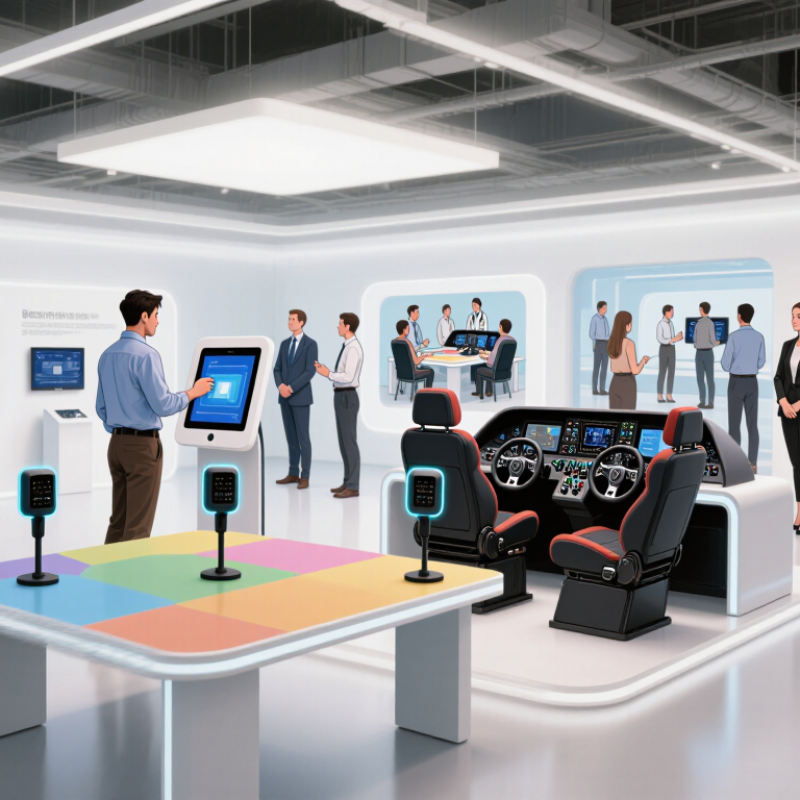
Experience equipment combines physical hardware, software, and sensory design. Examples include interactive walls, motion simulators, projection rooms, and responsive play systems. Most systems use cameras, pressure sensors, RFID tags, or motion trackers. These devices collect movement data. A control system then changes light, sound, visuals, or mechanical movement in real time.
This creates a more active customer journey than static displays. The Global Entertainment & Media Outlook 2024–2028 forecasts global entertainment and media revenue will reach about $3.4 trillion by 2028. The Global Wellness Economy Monitor reports that wellness spending reached $6.3 trillion in 2023. These figures support demand for memorable, health-conscious experiences. Still, buying equipment does not guarantee higher revenue. Poor calibration, long queues, and unclear instructions can damage customer trust. The risk is easy to underestimate. A practical design should support accessibility, routine maintenance, staff training, and local safety requirements. I may be too optimistic about novelty; customers often return for comfort and reliability.
Tips: Track dwell time, repeat visits, maintenance hours, and conversion rates before expanding. Test one small zone first. Keep controls simple. Ask visitors where the experience feels confusing. Review the answers honestly.
Why Buy Experience Equipment for Your Business?
Experience equipment can support clear business goals when it solves a real customer problem. Interactive displays, demonstration stations, and simulation tools can make complex products easier to understand. A visitor can test a feature, compare options, or watch a process in minutes. That direct experience may improve engagement and help sales teams answer practical questions.
It can also support training and operational consistency. New employees can practise with realistic equipment before handling live tasks. This reduces avoidable mistakes and gives managers useful feedback. In retail or hospitality settings, carefully designed equipment can shorten service steps and create a more memorable visit. Small details matter, such as screen height, lighting, noise levels, and cleaning access.
Measurement is essential. Track interaction time, qualified enquiries, training completion, repeat visits, or conversion rates. A pilot is safer than a large installation. Our first layout might be too crowded. That is useful evidence, not failure. Equipment will not repair weak service or unclear pricing. It works best when staff understand its purpose and customers can use it without assistance. Accessibility, maintenance, data protection, and safety checks should shape the purchase from the beginning. Otherwise, an impressive installation may become expensive furniture.
| Business Goal | How Experience Equipment Helps | Recommended Equipment Type | Key Data Dimension | Calculation Method | Business Value |
|---|---|---|---|---|---|
| Increase Visitor Engagement | Interactive displays and hands-on demonstrations encourage visitors to actively participate instead of only viewing static information. | Interactive screens, product demonstrators, motion-sensing installations | Interaction rate and average engagement time | Interaction rate = engaged visitors ÷ total visitors × 100% | Creates more opportunities for product education, conversation, and qualified follow-up. |
| Improve Lead Generation | Interactive experiences can connect participation with consent-based forms, QR codes, appointment requests, or product inquiries. | Digital kiosks, QR-enabled displays, touchscreen registration stations | Lead capture rate and qualified lead volume | Lead capture rate = completed valid forms ÷ engaged visitors × 100% | Turns visitor attention into trackable sales opportunities while reducing manual data entry. |
| Increase Conversion Opportunities | Virtual configuration, product comparison, and guided demonstrations help customers evaluate options before making a decision. | Product configurators, augmented-reality demonstrations, interactive comparison tables | Demonstration-to-inquiry rate | Demonstration-to-inquiry rate = inquiries after demonstration ÷ completed demonstrations × 100% | Supports informed buying decisions and gives sales teams clearer customer intent signals. |
| Extend Customer Dwell Time | Immersive and interactive content gives visitors a reason to stay longer and explore additional information. | Immersive projection systems, interactive walls, sensory experience installations | Average dwell time and repeat interactions | Average dwell time = total experience time ÷ number of engaged visitors | Provides more time to communicate product benefits, service details, and educational content. |
| Strengthen Brand Recall | Memorable, multisensory experiences communicate complex messages through visual, physical, and interactive formats. | Immersive rooms, interactive storytelling systems, audiovisual installations | Message recall and content completion rate | Content completion rate = visitors completing the experience ÷ experience starters × 100% | Helps organizations present consistent messages across exhibitions, showrooms, events, and visitor centers. |
| Collect Customer Insights | Interactive choices, surveys, preference tools, and usage analytics reveal what visitors select, ignore, or request. | Feedback kiosks, survey terminals, interactive product selectors | Response rate, preference distribution, and completion rate | Response rate = completed responses ÷ experience participants × 100% | Provides structured first-party feedback for product improvement, content planning, and service design. |
| Improve Staff Training | Simulation and scenario-based equipment allows employees to practice procedures in a controlled environment. | Training simulators, virtual-reality systems, procedure demonstration units | Training completion, assessment score, and error rate | Error-rate reduction = (baseline errors − post-training errors) ÷ baseline errors × 100% | Makes repeatable training easier to standardize and supports consistent skill assessment. |
| Support Events and Exhibitions | Portable and modular equipment helps businesses attract attention, demonstrate solutions, and manage visitor flow. | Portable displays, demonstration counters, interactive event systems | Qualified conversations, appointments, and cost per lead | Cost per lead = total event experience cost ÷ qualified leads generated | Creates a measurable connection between event investment, visitor activity, and sales follow-up. |
| Reduce Service and Explanation Time | Self-guided content answers common questions and demonstrates processes without requiring a staff member for every interaction. | Self-service kiosks, instructional screens, automated demonstration equipment | Self-service completion rate and staff time saved | Time saved = baseline handling time − post-installation handling time | Improves service efficiency and allows employees to focus on complex or high-value interactions. |
| Measure Return on Investment | Digital tracking links equipment usage with visits, leads, appointments, sales opportunities, and operating costs. | Analytics-enabled interactive systems, connected kiosks, event measurement tools | Conversion value, operating cost, and payback period | ROI = (incremental gross profit − total experience cost) ÷ total experience cost × 100% | Provides a consistent framework for comparing experience investments with other marketing, sales, or training activities. |
Note: The metrics above are measurable planning dimensions. Actual results depend on audience volume, content quality, equipment reliability, staff support, location, and follow-up processes.
Experience equipment can turn passive visitors into active participants. Interactive displays, product simulators, and hands-on demonstration stations create moments customers remember. In my experience, people engage longer when they can touch, test, compare, or control something themselves. A visitor adjusting a product setting on a screen feels more involved than someone reading a poster. That involvement can strengthen trust and make your business easier to recall.
Tips: Match the equipment to your customer’s real needs. Keep instructions short and visible. Test every feature before opening each day. Track dwell time, repeat interactions, questions, and customer feedback. Train staff to guide visitors without interrupting their independence. Accessibility also matters, including clear audio, readable text, safe movement space, and simple controls.
Novelty alone is not enough. We sometimes overestimate impressive visuals and underestimate useful details. A bright installation may attract attention, yet confusing controls can quickly damage the experience. Equipment should support your brand’s promise, not distract from it. Reliable maintenance protects that promise over time. When a device stops working, customers notice immediately. Regular inspections, clean surfaces, and honest feedback can reveal weaknesses before they affect trust. The best setup may not be the most expensive one. It is the one that helps customers understand value through direct experience.
Before buying experience equipment, businesses should define the customer experience they want to create. A busy family venue needs durable, intuitive systems, while a training center may value precision and data. During a pilot installation, staff should observe waiting times, noise levels, and user confusion. Small details matter. Can visitors enter, understand, and exit without constant assistance? Equipment that looks impressive may still slow operations or frustrate first-time users.
Budgeting requires more than the purchase price. Include delivery, installation, software updates, staff training, energy use, repairs, and replacement parts. Ask the supplier for realistic maintenance schedules and response times, preferably in writing. Test the equipment during peak conditions, not only in a quiet showroom. A system handling ten users smoothly may fail with thirty. That gap can damage revenue and trust.
Safety, accessibility, and local compliance deserve practical checks before approval. Review emergency stops, flooring, ventilation, cleaning procedures, age limits, and accessible controls. Ask an independent technician to inspect electrical and structural requirements when needed. Reliable evidence includes test records, training documents, and references from comparable businesses. Still, no forecast is perfect. Staff may underestimate cleaning time, or customers may ignore instructions. Leave room for redesign after real users reveal problems. Then track downtime, repeat use, complaints, and repair costs for several months.
Buying experience equipment is not a performance strategy by itself. The business must connect the equipment with measurable customer behavior. Track daily users, average dwell time, repeat visits, conversion rate, and revenue per session. A simple utilization rate is useful: operating hours divided by available hours. Maintenance downtime must remain visible.
Industry data shows why measurement matters. The 2023 TEA/AECOM Theme Index recorded about 243.7 million visits across the world’s top 25 theme parks, a 23.5% increase from 2022.
However, attendance alone cannot prove equipment value. PwC’s Global Entertainment & Media Outlook 2024–2028 projects worldwide entertainment and media revenue will reach about $3.4 trillion by 2028. Demand is growing, but not every installation earns its cost.
Use a pilot before making a full purchase. Compare one location with similar locations without the equipment. Record baseline sales for four weeks, then measure changes for at least eight weeks. Connect bookings, QR scans, memberships, and repeat purchases to the experience. Calculate payback period using net incremental profit, not total sales. Include staffing, repairs, software, space, and energy costs. Customer feedback also matters. A short survey can reveal whether visitors enjoyed the experience or merely tolerated it.
The first dashboard may mislead. Busy hours can hide low profitability. A high satisfaction score may reflect novelty, not loyalty. Review results monthly, inspect the equipment in person, and revise assumptions when the numbers disagree.
JK Machinery a.s.
Psohlavců 322/4, Praha 4,
Czechia
T: +420 777 610 380
E: sale@roll-formingmachinery.com