7 Best Production Equipment Suppliers for Global Buyers

Choosing production equipment for a global facility is rarely a simple price comparison. A machine may look efficient in a showroom, yet struggle with local voltage, operator training, spare-parts access, or unfamiliar safety requirements. This guide examines seven leading suppliers through practical criteria. These include equipment reliability, technical support, customization, delivery capability, energy performance, and total ownership cost.

Taiichi Ohno, the manufacturing engineer widely recognized as the father of the Toyota Production System, said, “Without standards, there can be no improvement.” His observation remains highly relevant to international equipment purchasing. Buyers need clear specifications before comparing suppliers. They should examine cycle time, material compatibility, maintenance intervals, software integration, and documented testing procedures. Small details matter. A delayed sensor can stop an entire line.

The suppliers discussed here serve different production environments and buyer expectations. Some offer broad portfolios for large factories. Others provide specialized systems, flexible automation, or stronger regional service networks. Their suitability can change by industry, location, and project scale. There is no universal winner. That point is easy to overlook.

Reliable selection also requires direct verification. Request reference installations, service-response data, warranty terms, and realistic commissioning schedules. Reviewers should not depend only on polished demonstrations or impressive capacity figures. Even this comparison has limits, because supplier performance can vary between regions and partner networks. Still, the following overview gives global buyers a practical starting point for evaluating production equipment with greater confidence, discipline, and technical awareness.
7 Best Production Equipment Suppliers for Global Buyers

What Defines a Reliable Production Equipment Supplier

A reliable production equipment supplier does more than quote a machine. They understand how it will perform on a real factory floor. During equipment evaluations, I look for clear specifications, stable output data, and practical evidence from comparable installations. Sales promises alone are not enough.

Trust grows through visible process. A capable supplier explains material limits, cycle times, energy use, and maintenance intervals without hiding weaknesses. They provide test records, installation drawings, calibration details, and safety documentation. Their engineers should answer technical questions directly, even when the answer is inconvenient. That matters. Details decide.

Support after delivery often reveals the supplier’s true quality. Reliable teams offer operator training, spare-parts planning, remote troubleshooting, and defined response times. They also inspect the site before installation instead of guessing from photographs. I have seen projects suffer because a supplier ignored voltage differences, floor loading, or limited workspace. Small oversights become expensive delays.

A strong supplier can share customer references, but buyers should verify them independently. Ask about downtime, service speed, output consistency, and hidden costs. Total value includes maintenance, training, software updates, and replacement parts. No supplier gets every detail right. The honest ones document risks and correct mistakes quickly. That level of transparency helps global buyers choose equipment that remains dependable after the contract is signed.
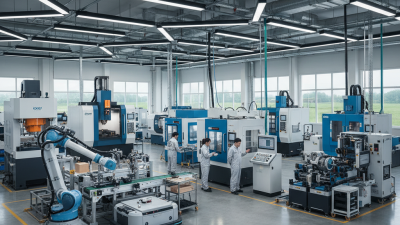

Seven Leading Suppliers and Their Core Equipment Specialties

7 Best Production Equipment Suppliers for Global Buyers

Seven Leading Suppliers and Their Core Equipment Specialties

Global buyers usually compare suppliers by equipment fit, service quality, and proven operating results. A low purchase price rarely tells the whole story. Installation support, spare-part access, and operator training can decide whether a line performs well.

A process-equipment supplier may specialize in mixers, reactors, and temperature-control systems for food or chemical production. A packaging supplier typically provides filling, sealing, labeling, and case-packing machines. CNC equipment suppliers focus on machining centers, turning systems, and cutting tools for accurate metal parts. Injection-molding suppliers offer presses, molds, dryers, and material-handling units. Robotics specialists build palletizing, welding, and pick-and-place cells. Inspection suppliers provide vision cameras, weighing systems, and traceability software. Cold-chain suppliers concentrate on chillers, freezers, conveyors, and insulated storage equipment.

I have seen buyers approve impressive demonstrations, then struggle with local power standards and unfamiliar controls. That mistake is avoidable. Ask for factory references, acceptance-test records, maintenance schedules, and realistic delivery times. Check whether manuals match your operators’ language and skill level. No supplier is perfect. Some provide excellent machines but weak documentation. Others respond quickly but lack nearby technicians. A practical evaluation should score performance, safety, lifecycle cost, and after-sales reliability before any contract is signed.

How the Suppliers Compare by Quality, Scale, and Technology

Choosing production equipment suppliers requires more than comparing catalog prices. Quality appears in repeatability, material traceability, and after-sales response. During factory evaluations, buyers should inspect sample output, calibration records, and maintenance areas. A clean production floor helps, but it does not prove consistent performance. Ask for recent test data and customer references from similar industries.

Scale matters when orders grow or spare parts are needed quickly. Larger suppliers may offer wider manufacturing capacity, stronger logistics, and dedicated technical teams. Smaller suppliers can provide faster customization and more direct communication. However, their delivery systems may depend on a few key employees. Technology also separates suppliers clearly. Look for automated inspection, digital monitoring, energy controls, and software that records production faults. Advanced features are useful only when operators understand them.

Tips: Compare suppliers with the same checklist. Score quality, capacity, technology, service, and total ownership cost separately. Request a pilot order before signing a large contract. Measure defect rates, installation time, training quality, and response speed. Do not trust impressive demonstrations alone. Some equipment performs well in a showroom but struggles with dust, heat, or continuous operation. Buyers should also revisit their own requirements; an advanced machine may be unnecessary for a stable, low-volume process. Supplier rankings are helpful, but they are never permanent. Performance can change after management, materials, or production conditions change.

7 Best Production Equipment Suppliers for Global Buyers - How the Suppliers Compare by Quality, Scale, and Technology

Supplier Profile Primary Equipment Focus Quality Management Production Scale Technology Capability Global Service Coverage Typical Lead Time Best Fit
Supplier Profile 1 CNC machining and metal fabrication ISO 9001-based processes; dimensional inspection and material traceability Large; multi-site production and high-volume batch capability 5-axis machining, CAD/CAM integration, automated inspection Export support across North America, Europe, and Asia-Pacific 8–16 weeks Industrial machinery and repeat production
Supplier Profile 2 Packaging and filling equipment Documented factory acceptance testing; validated operating procedures Large; standardized platforms with configurable modules PLC controls, servo drives, remote diagnostics, line integration Distributor and service-partner network in more than 50 markets 12–24 weeks Food, beverage, cosmetics, and consumer goods
Supplier Profile 3 Injection molding machinery ISO-aligned quality systems; process validation and performance testing Large; suitable for small, medium, and high-volume molding operations Energy-monitoring systems, closed-loop control, robotic integration Regional technical teams and multilingual commissioning support 10–20 weeks Plastic components and contract manufacturing
Supplier Profile 4 Process systems and industrial automation Risk-based quality planning; digital documentation and supplier audits Very large; engineered systems and turnkey project delivery MES connectivity, industrial IoT, digital twins, predictive maintenance Direct project teams across major industrial regions 20–40 weeks Automotive, chemicals, energy, and large factories
Supplier Profile 5 Material handling and warehouse equipment Factory testing, safety compliance checks, and service-part control Medium to large; modular equipment for scalable facilities Automated storage, conveyors, barcode systems, fleet software Strong integration partners in Europe, the Middle East, and Asia 8–18 weeks Distribution centers and e-commerce fulfillment
Supplier Profile 6 Industrial pumps, compressors, and fluid systems Performance testing, materials certification, and preventive maintenance programs Large; broad product portfolio with project-based customization Variable-speed drives, condition monitoring, energy-efficiency analytics Established after-sales support in more than 40 countries 14–28 weeks Water treatment, power, manufacturing, and infrastructure
Supplier Profile 7 Additive manufacturing and rapid prototyping Material qualification, build traceability, and post-processing inspection Medium; specialized production with flexible batch sizes Metal and polymer 3D printing, simulation, automated build monitoring Digital delivery model with regional application-engineering support 4–12 weeks Aerospace, medical devices, tooling, and low-volume parts
Comparison note: Lead times are typical planning ranges for standard or moderately customized equipment. Actual delivery depends on specifications, factory capacity, regulatory requirements, testing scope, shipping conditions, and installation needs.

Key Considerations for International Buyers

7 Best Production Equipment Suppliers for Global Buyers

Key Considerations for International Buyers

Choosing production equipment overseas requires more than comparing catalog prices. A reliable supplier should provide traceable specifications, factory test records, and clear installation requirements. Ask for proof. Request recent uptime data, maintenance schedules, and customer references from similar industries.

International buyers should verify electrical standards, safety documentation, export packaging, and import paperwork before signing. Voltage differences can damage equipment during commissioning. Unclear tariff classifications may also create unexpected delays. Confirm the correct HS code with a qualified customs professional. Local language support matters when operators face alarms at 2 a.m.

The strongest suppliers explain total ownership costs, not only the purchase price. Review spare-part availability, technician response times, software updates, training, and warranty exclusions. A factory acceptance test should measure output, noise, energy use, and defect rates against written targets. Later, a site acceptance test can confirm performance after installation. Do not rely on polished demonstrations alone. They may use ideal materials and experienced operators. Ask to inspect an operating installation, if possible.

A practical shortlist can include seven suppliers with proven international projects, transparent contracts, and documented quality systems. Still, no checklist catches every risk. Delivery estimates can change, and even good equipment may need process adjustments. Leave room for that reality in the budget and schedule.

Steps for Selecting and Purchasing Production Equipment Globally

Steps for Selecting and Purchasing Production Equipment Globally

Choosing production equipment across borders starts with a clear process requirement. Define output, material type, operating hours, floor space, and acceptable error rates. A vague request for quotation often produces vague offers.

Compare at least seven qualified suppliers using the same technical document. Review production history, engineering qualifications, export experience, and documented customer references. Ask for drawings, utility requirements, testing procedures, warranty terms, spare-parts lists, and operator training details. A remote factory tour helps, but an independent inspection is more reliable. Request a factory acceptance test before shipment. Small omissions become expensive overseas.

Evaluate the full purchase cost, not only the quoted machine price. Include packaging, freight, insurance, customs clearance, installation, local taxes, and future maintenance. Confirm payment milestones and keep final payment linked to verified performance. Check whether the equipment meets the destination market’s safety and electrical requirements. Written communication matters; translate critical specifications and record every revision. I once saw a project delayed because “ready to ship” meant mechanically complete, not fully tested. That assumption needed challenging. Plan for spare parts and technical support across time zones. Leave room for uncertainty. Real production conditions rarely match the sales sample.