Choosing the right Jaw Stone Crusher in 2026 requires more than comparing prices and motor power. Global buyers face different quarry conditions, transport limits, safety rules, and after-sales expectations. A crusher that performs well in a dry limestone quarry may struggle with wet, abrasive granite. Real purchasing decisions must begin with feed size, output goals, material hardness, and daily operating hours.
This guide examines the features that matter in practical applications. It considers jaw plate design, crushing capacity, energy use, frame strength, dust control, and maintenance access. It also reviews supplier experience, spare parts availability, warranty terms, and technical support. These details often decide whether a machine delivers stable production or creates expensive delays. A reliable supplier should provide clear specifications, test records, installation guidance, and references from comparable projects.
Performance claims deserve careful checking.
Catalog numbers can look impressive. Field results may differ. We therefore encourage buyers to request production data under similar conditions and inspect the machine before final payment. Local regulations, electrical systems, and safety requirements must also be confirmed with qualified professionals. No single Jaw Stone Crusher suits every market or rock type. Even experienced buyers can overlook small issues, such as difficult belt access or limited workshop tools. That is worth remembering. This 2026 overview offers a practical framework for comparing models, questioning supplier promises, and selecting equipment with stronger long-term value.
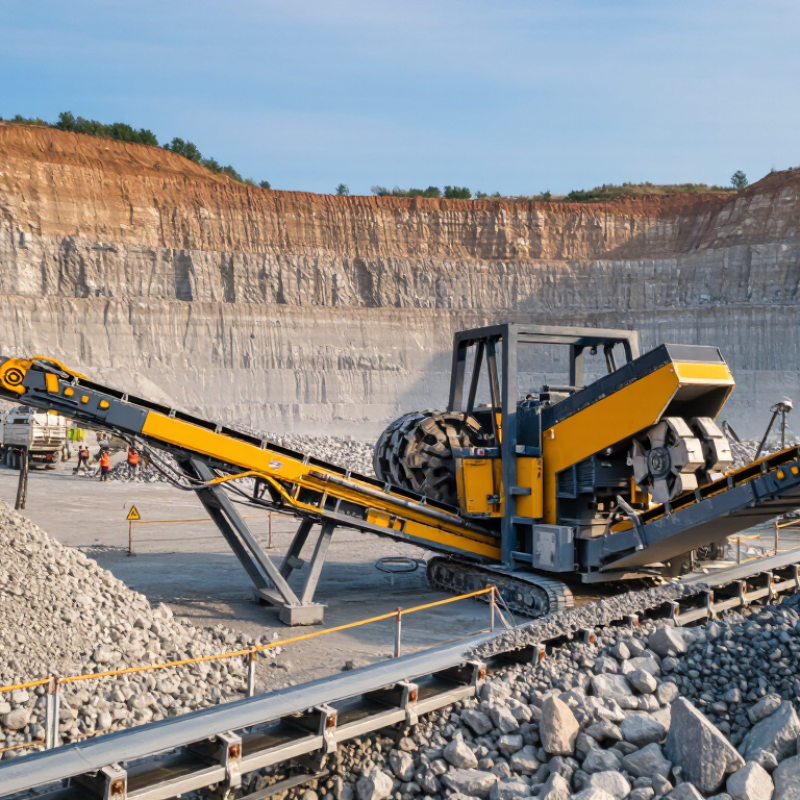
2026 Best Jaw Stone Crusher for Global Buyers?
Jaw crushers remain primary machines for hard, abrasive rock. Their working principle is simple: a fixed jaw and moving jaw compress feed until it breaks. Common capacities range from 50 to 1,500 tonnes per hour. The actual figure depends on feed size, rock density, moisture, and closed-side setting.
The 4:1 to 8:1 reduction range is a practical purchasing reference. A 1,200 mm feed reduced to 150 mm represents an 8:1 ratio. However, real production rarely follows the brochure perfectly. Oversized lumps, sticky clay, and uneven feeding can reduce output sharply. The U.S. Geological Survey’s Mineral Commodity Summaries 2025 estimates American crushed-stone production near 1.5 billion metric tons in 2024, showing the scale of aggregate demand. Yet demand alone does not justify selecting the largest frame.
Measure the feed first. Record the hardest rock, maximum lump size, bulk density, and hourly target. Then compare capacity at the intended setting, not at an ideal laboratory condition. The European Commission’s Best Available Techniques reference for mineral processing emphasizes controlled feeding and dust management as important operating practices. A vibrating feeder, magnetic separator, and properly designed discharge conveyor can stabilize production. Small details matter.
Capacity is not everything. It is easy to overlook maintenance access, liner wear, power availability, and transport limits. A 50 t/h unit may suit a remote quarry better than a 500 t/h machine. My own caution is simple: capacity ranges are useful, but site data should decide the final specification.
Jaw crusher fundamentals by equipment size class. Typical primary-crushing capacities range from 50 to 1,500 t/h, while reduction ratios generally range from 4:1 to 8:1 depending on feed material, discharge setting, and operating conditions.
Representative engineering ranges for conventional primary jaw-crushing applications. Actual performance varies with rock hardness, feed gradation, moisture, closed-side setting, liner condition, and operating practice.
Choosing a jaw stone crusher starts with feed size, not advertised capacity. A 100 mm inlet suits smaller rock, while a 1,200 mm opening handles large quarry blocks. Oversized stones can bridge the chamber and cause sudden stoppages.
The inlet must exceed the largest regular feed, with room for uneven pieces. In practice, I would measure the real rock size, not rely on loader estimates. Hard, flat slabs behave differently from rounded stone. They may enter easily but resist crushing inside the chamber.
CSS, or closed-side setting, controls the discharge size. A tighter CSS usually produces smaller material, but capacity can fall and wear may increase. A wider CSS improves throughput, though the product becomes coarser. It is a trade-off. Always.
Operators should check CSS during production because vibration, wear, and adjustment errors can change output. A crusher with a 1,200 mm inlet is not automatically the best choice for every site. It may consume more power and require larger supporting equipment. Smaller openings can perform better when feed is controlled and consistent.
Moist or clay-coated rock creates another problem. It can block the feed area before crushing begins. Site trials, laboratory testing, and verified production data provide stronger evidence than catalog figures. I would also inspect the jaw plates after several shifts. Early wear often reveals an unsuitable setting or inconsistent feed.
2026 Best Jaw Stone Crusher for Global Buyers?
Stationary, mobile, and tracked jaw crushers serve different production conditions. A stationary jaw crusher suits a permanent quarry with stable power, prepared foundations, and high yearly output. Its fixed layout supports larger feed systems and simpler material flow. However, installation may require months of civil work. It needs space.
Mobile jaw crushers fit contractors handling several sites. They can move between stockpiles, road projects, and temporary pits with less relocation equipment. Wheeled units usually travel faster on prepared roads. Their operating cost can rise when rough ground demands frequent repositioning.
Tracked jaw crushers perform well on uneven terrain and confined construction sites. Tracks reduce dependence on haul roads and support short-distance movement around a work area. I have found their mobility valuable near demolition zones and narrow access routes. Noise matters. Dust control matters more.
Buyers should compare feed size, required output, crushing ratio, fuel use, and maintenance access. A larger machine is not automatically better if the excavator cannot feed it consistently. Check jaw plate availability, technician support, and transport limits before signing an order. My earlier assumption favored maximum capacity, but real projects often lose money through idle hours. A site trial or verified production record is more dependable than a catalog estimate.
| Comparison Dimension | Stationary Jaw Crusher | Mobile Jaw Crusher | Tracked Jaw Crusher |
|---|---|---|---|
| Primary Design | Fixed crushing unit installed on a concrete foundation or steel structure. | Jaw crusher mounted on a wheeled chassis and normally moved by a tractor or truck. | Jaw crusher mounted on crawler tracks with an integrated hydraulic drive system. |
| Best-Fit Application | Large quarries, long-life mining operations, and permanent aggregate plants. | Road projects, contract crushing, recycling yards, and operations requiring periodic relocation. | Demolition, difficult terrain, short-term projects, and job sites with frequent movement. |
| Typical Feed Opening | Approximately 600 × 400 mm to 1,600 × 1,200 mm, depending on the equipment class. | Approximately 700 × 500 mm to 1,200 × 800 mm for common primary crushing models. | Approximately 700 × 500 mm to 1,200 × 800 mm for common tracked primary crushers. |
| Typical Maximum Feed Size | Approximately 350–1,000 mm, depending on the feed opening and jaw configuration. | Approximately 400–750 mm for commonly used mobile units. | Approximately 400–750 mm for commonly used tracked units. |
| Indicative Capacity | Approximately 50–1,500 tonnes per hour. | Approximately 80–700 tonnes per hour. | Approximately 80–600 tonnes per hour. |
| Typical Installed Power | Approximately 75–1,000 kW for the jaw crusher and its associated plant equipment. | Approximately 150–600 kW, generally supplied by an onboard diesel-electric or diesel-hydraulic system. | Approximately 200–600 kW, generally supplied by an onboard diesel-hydraulic or diesel-electric system. |
| Mobility Between Sites | Very low; relocation normally requires dismantling, lifting, and transport permits. | High; suitable for road transport after preparing the chassis and complying with local regulations. | High on the job site; usually transported between sites on a low-bed trailer. |
| Movement on Uneven Ground | Not designed for self-propelled movement. | Limited without a suitable towing vehicle and prepared access route. | Very good; tracks provide low-speed movement over many uneven and unpaved surfaces. |
| Setup Time | Several weeks to several months, including civil works, structural installation, and plant commissioning. | Typically several hours to one or two days, depending on transport, leveling, and auxiliary equipment. | Typically several hours to one day for positioning, leveling, inspection, and connection to the crushing circuit. |
| Transportation Requirements | Heavy-haul transport, cranes, and site lifting equipment are commonly required. | Road-compatible towing arrangement, transport permits, and route clearance may be required. | Low-bed trailer, loading access, and transport permits are commonly required. |
| Production Stability | Excellent for continuous high-volume production when feeding, screening, and conveying systems are properly matched. | Very good, but production can be affected by relocation, site access, and onboard fuel or power limitations. | Very good for flexible site work; production may vary with ground conditions and frequent repositioning. |
| Fuel and Energy Profile | Often connected to grid electricity or a centralized plant power system, which can reduce operating cost where reliable power is available. | Onboard power increases flexibility but may result in higher fuel use during remote operation or transport preparation. | Onboard power provides strong site independence, although fuel consumption and maintenance must be monitored closely. |
| Maintenance Access | Generally the easiest to service because of spacious platforms, fixed utilities, and permanent access structures. | Good service access, but maintenance may be affected by compact layouts and frequent relocation. | Good access on modern designs, but track assemblies, hydraulic systems, and undercarriage components require additional inspection. |
| Foundation Requirement | Usually requires engineered foundations, reinforced concrete, or a substantial steel support structure. | Normally requires a level, compacted working surface rather than a permanent foundation. | Normally requires a firm and reasonably level operating surface with sufficient bearing capacity. |
| Noise and Dust Control | Best suited to permanent dust suppression, noise barriers, enclosed transfer points, and fixed extraction systems. | Can use onboard or connected spray systems, but dust-control performance depends on the site configuration. | Can use integrated spray systems; mobile operation requires careful placement to protect nearby workers and communities. |
| Typical Capital Strategy | Higher initial infrastructure investment but favorable unit cost for high annual production and long service life. | Higher equipment cost than a basic fixed unit, balanced by lower civil works and greater asset utilization across sites. | Higher purchase and undercarriage complexity can be justified when rapid relocation and difficult access are important. |
| Main Advantages | High throughput, stable operation, broad configuration options, efficient integration with screens and conveyors, and long-term production suitability. | Good balance between mobility, capacity, operating flexibility, and reduced site construction requirements. | Excellent maneuverability, strong performance on uneven terrain, rapid relocation, and reduced dependence on site infrastructure. |
| Main Limitations | High civil-work cost, difficult relocation, longer installation period, and limited flexibility for changing project locations. | Requires towing or transport planning, may have legal road-width or weight restrictions, and may need stabilizing before operation. | Higher undercarriage maintenance, limited road travel speed, transport preparation requirements, and potentially higher fuel consumption. |
| Recommended Buyer Profile | Buyers with a permanent site, reliable power supply, predictable reserves, and a high annual production target. | Contractors and aggregate producers serving multiple locations with moderate to high production requirements. | Demolition contractors, mining contractors, infrastructure builders, and buyers working in remote or frequently changing locations. |
| Key Selection Checks for 2026 | Confirm foundation design, power availability, liner life, spare-parts access, maintenance platforms, and complete plant capacity. | Confirm transport dimensions, axle loads, legal road limits, feeder capacity, hydraulic systems, and service support near operating regions. | Confirm operating weight, transport dimensions, track durability, ground pressure, hydraulic maintenance requirements, and remote-control features. |
| Buyer Note | Capacity, feed size, power, and operating weight vary significantly with jaw geometry, material hardness, moisture, CSS setting, feeding method, and circuit design. Treat the ranges above as preliminary comparison values and request a model-specific technical specification before purchase. | ||
| Technical Basis | The figures are representative industry ranges for commonly supplied primary jaw-crushing equipment. Actual performance should be verified through application testing, material analysis, duty-cycle calculations, local electrical and transport regulations, and the supplier’s certified data sheet. | ||
When comparing jaw stone crushers in 2026, global buyers should measure performance at the quarry, not only on paper. Power matters, but rated motor output does not tell the whole story. Track feed size, rock hardness, moisture, and daily tonnes during a controlled trial. A crusher handling 120 tonnes per hour may slow sharply with wet, slab-like material. Record fuel or electricity use beside actual production. Small differences become expensive over twelve months.
Wear life deserves direct inspection. Measure jaw plate thickness before and after a fixed production cycle. Experienced operators also check cracks, uneven wear, and loose fasteners during routine shutdowns. These details often predict future downtime better than brochure claims. Keep spare plates, bearings, and belts available near the site. Delayed parts can stop a remote operation for several days.
Product size must match the next processing stage. Measure the discharge opening, then test actual output with a screen and sample sieve. Finer product may require more power and increase plate wear. Operating cost includes energy, labor, maintenance, transport, and lost production. I once focused too heavily on purchase price and underestimated servicing time. That decision looked efficient for three months. It was not. Ask suppliers for verified test conditions, maintenance records, and realistic capacity ranges. A clear data trail supports better purchasing decisions.
For global jaw crusher buyers, safety should be checked before price. The International Labour Organization estimates 2.93 million work-related deaths and 395 million non-fatal injuries annually. Crushing plants add serious risks through stored energy, flying rock, dust, and unexpected starts.
Request a documented risk assessment based on ISO 12100. Guards, emergency stops, lockout points, and restart prevention should be physically demonstrated during factory acceptance testing. For control systems, ask whether safety functions follow ISO 13849-1.
In Europe, EN 1009-3:2020 offers specific safety guidance for crushing and milling machinery. These standards support verification, but they do not replace site-specific engineering.
Noise matters too. NIOSH recommends an 85 dBA, eight-hour exposure limit. Ask for measured noise data, not a general promise. Confirm dust-control performance, bearing temperatures, vibration limits, and overload protection under realistic feed conditions. A supplier should provide drawings, serial-number records, inspection reports, spare-parts lists, and clear commissioning responsibilities. Check the legal company identity and speak with recent users operating similar rock types. A video is useful, but never enough.
Some buyers forget maintenance access.
That mistake is expensive.
I would also question unusually short delivery times. They may indicate missing tests, incomplete guarding, or weak documentation. Even experienced purchasers can overtrust certificates. Independent inspection before shipment is often cheaper than correcting an unsafe installation overseas.
JK Machinery a.s.
Psohlavců 322/4, Praha 4,
Czechia
T: +420 777 610 380
E: sale@roll-formingmachinery.com